

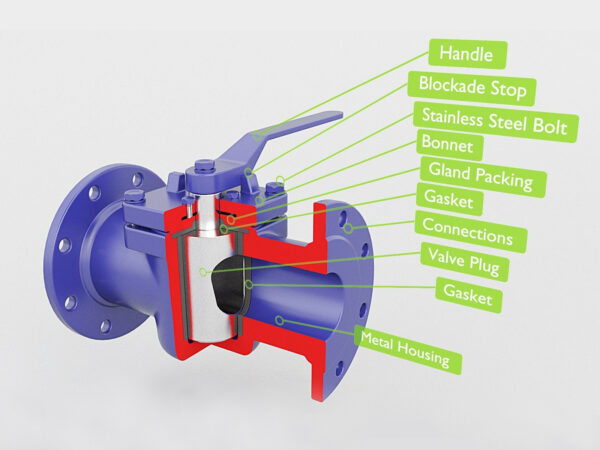


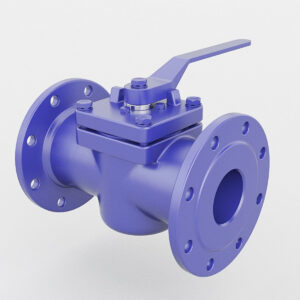
Plug

Pressure Classes: ANSI 150-2500
Sizes: 1/2’’ to 52’’
- Side entry and top entry
- Two or three pieces body construcion
- Bolted Joints
- Flanged, Socket Weld, Butt Weld, NPT Thread
- Extremely wide selection of materials for both body and internals, including: carbon steel, low alloy steels, stainless steels, Duplex
- Overlays
- Coatings: Tungsten Carbide, Chromium Carbide and ENP
- Soft or Metal Seated
- Double Block & Bleed
- Overlay on Sealing Surfaces
- Cladding in Seat Pocket Areas
- Fully Internally Cladded
- Special constructions available for High and Low Temperature (Cryogenic)
- Cryogenic type-test, Fugitive emissions type-test and Fire Safe type-test certificates

- Description
Description
A plug valve is a quarter-turn valve that uses a cylindrical or tapered plug with a hollow passage to control fluid flow. When the passage is aligned with the pipeline, the valve is open; a 90-degree turn blocks the flow. It’s simple, straightforward design makes it an effective and reliable choice for on/off service. Available in A105, A182/F316 steel.
Types of Plug Valves
There are two primary types of plug valves, distinguished by their sealing mechanism:
- Lubricated Plug Valves: These valves use a sealant or lubricant injected into the valve body to reduce friction and create a tight seal. This lubricant forms a renewable barrier between the plug and the body, making them suitable for high-pressure, high-temperature applications or those with abrasive fluids.
- Non-Lubricated Plug Valves: Instead of a lubricant, this type of valve uses a sleeve or liner, often made from a non-metallic material like PTFE, to provide a low-friction surface between the plug and the valve body. This design prevents fluid contamination and is ideal for services like natural gas, where the lubricant could be a contaminant.
ASME and API Standards
The design, testing, and performance of plug valves are governed by key industry standards.
- ASME B16.34: This standard covers the design and pressure-temperature ratings for flanged, threaded, and welding-end valves, including plug valves. It sets the minimum wall thickness and material requirements to ensure the valve’s pressure-containing integrity.
- API 599: This standard is a purchase specification that focuses on the design, dimensions, and testing requirements for metal plug valves. It covers both lubricated and non-lubricated types and specifies critical aspects like face-to-face dimensions and operational performance.
- API 6D: This standard is specifically for pipeline valves and includes design and testing requirements for plug valves used in petroleum and natural gas pipeline systems. It provides strict guidelines for manufacturing, testing, and documentation to ensure high reliability and safety in these critical applications.
- API 598: This standard outlines the general inspection and testing procedures for various valves, including plug valves. It details the required hydrostatic and pneumatic tests to verify shell and seat integrity and specifies acceptable leakage rates.


