






- Description
Description
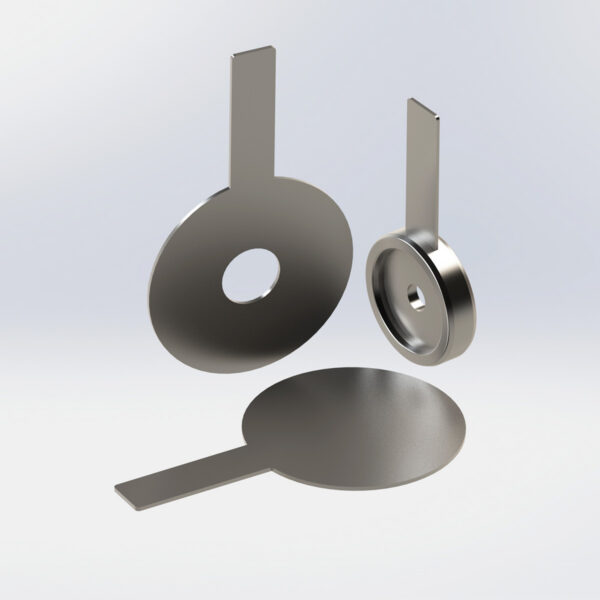
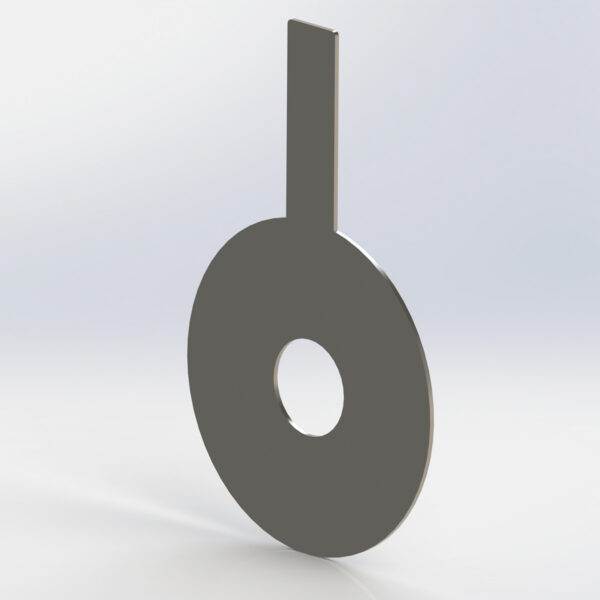
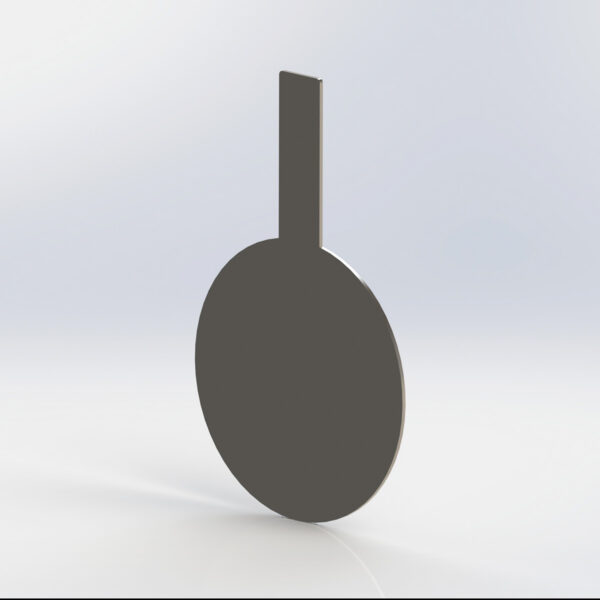
An orifice plate is a thin plate with a precisely machined hole, or orifice, that is installed perpendicular to the flow in a pipeline. Its primary function is to measure flow rate by creating a pressure drop across the plate. When fluid passes through the orifice, its velocity increases, and the pressure decreases. By measuring the differential pressure between the upstream and downstream sides of the plate, the flow rate can be calculated using established formulas based on Bernoulli’s principle. This device is known for its simplicity, cost-effectiveness, and reliability.
Types of Orifice Plates
Orifice plates are classified by the design of their opening, which makes them suitable for different fluid properties and applications.
- Concentric Orifice Plate: This is the most common type, with a circular hole centered in the middle of the plate. It is used for clean liquids, gases, and steam where no solids are present.
- Eccentric Orifice Plate: The hole is offset from the center, positioned closer to the pipe wall. This design helps prevent the accumulation of solids or sediment in the pipe, making it suitable for viscous fluids or fluids with entrained solids.
- Segmental Orifice Plate: This type has a segment-shaped opening, designed specifically to handle fluids with a high concentration of solids or slurries, as it provides a large open area for passage.
- Quadrant-Edge Orifice Plate: The inlet edge of the hole is rounded in a quarter-circle shape. This design is ideal for measuring the flow of high-viscosity fluids (such as heavy crude oil or syrups) at low Reynolds numbers.
ASME and API Standards
The design, fabrication, and use of orifice plates are governed by a number of standards to ensure accuracy and consistency.
- API MPMS Chapter 14.3 / AGA Report No. 3: This is a key standard for orifice metering of natural gas and other hydrocarbon fluids. It provides detailed equations, specifications, and installation requirements for orifice plates and meter tubes to ensure high-accuracy measurement.
- ASME MFC-3M: This standard specifies the design, installation, and performance of orifice plates, nozzles, and venturi tubes for fluid flow measurement in pipes. It provides the technical basis for calculating flow rate from differential pressure measurements.
- ASME B16.36: This standard is specifically for orifice flanges, which are the flanges used to install orifice plates. It provides dimensions, tolerances, and markings to ensure a proper and secure installation.
- ISO 5167: This international standard provides a broad framework for the measurement of fluid flow by means of pressure differential devices, including orifice plates, nozzles, and Venturi tubes. It’s often used in conjunction with API and ASME standards.


